Best 10 Chicken-Free Dog Food Options
Disclosure: some links below are affiliate links. If you buy through one we may earn a commission at no extra cost to you. It never changes what we recommend or how we rank it.
Chicken is the most common protein in commercial dog food, which is exactly why it is also one of the most common triggers for food allergies and sensitivities. If your dog has been scratching, chewing their paws, dealing with recurring ear infections, or having chronic loose stool, your veterinarian may have suggested trying a no chicken dog food diet to rule out a chicken allergy. This guide walks you through what to look for, why chicken causes problems for some dogs, and which chicken-free dog food options tend to work best.
Why Some Dogs Need Chicken-Free Food
Food allergies in dogs are almost always a reaction to a protein the dog's immune system has been exposed to repeatedly over time. Because chicken appears in the vast majority of kibble, treats, and wet food on the market, dogs are exposed to it constantly from puppyhood onward. Over months or years, some dogs develop an immune response to chicken proteins, resulting in itchy skin, hot spots, ear infections, gas, and soft stool.
What to Look For in Dog Food Without Chicken
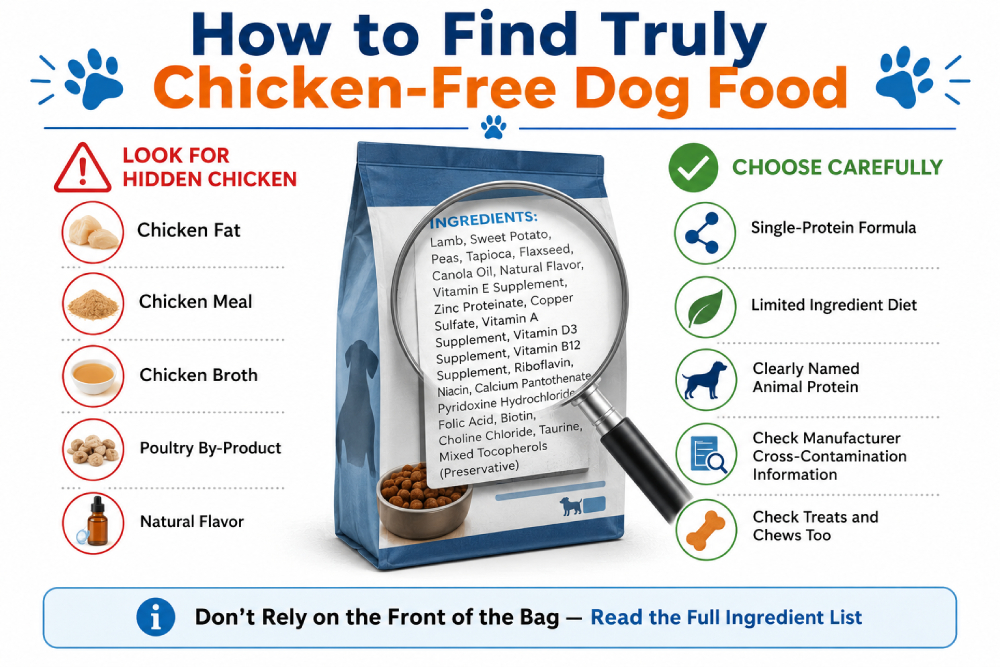
Finding true dry dog food without chicken or chicken by-products requires more than skimming the front of the bag. Many "duck" or "salmon" formulas still contain chicken fat, chicken meal, or chicken broth buried in the ingredient list.
- Scan for hidden chicken: Look for "chicken fat," "chicken meal," "chicken broth," "poultry by-product," and "natural flavor"
- Choose single-protein formulas: Limited ingredient diets with one animal protein source make it easier to identify triggers
- Watch for cross-contamination: Some manufacturers produce chicken and non-chicken formulas on the same equipment
- Check the treats too: An elimination diet only works if every item your dog eats is chicken-free
Best 10 Chicken-Free Dog Food Options
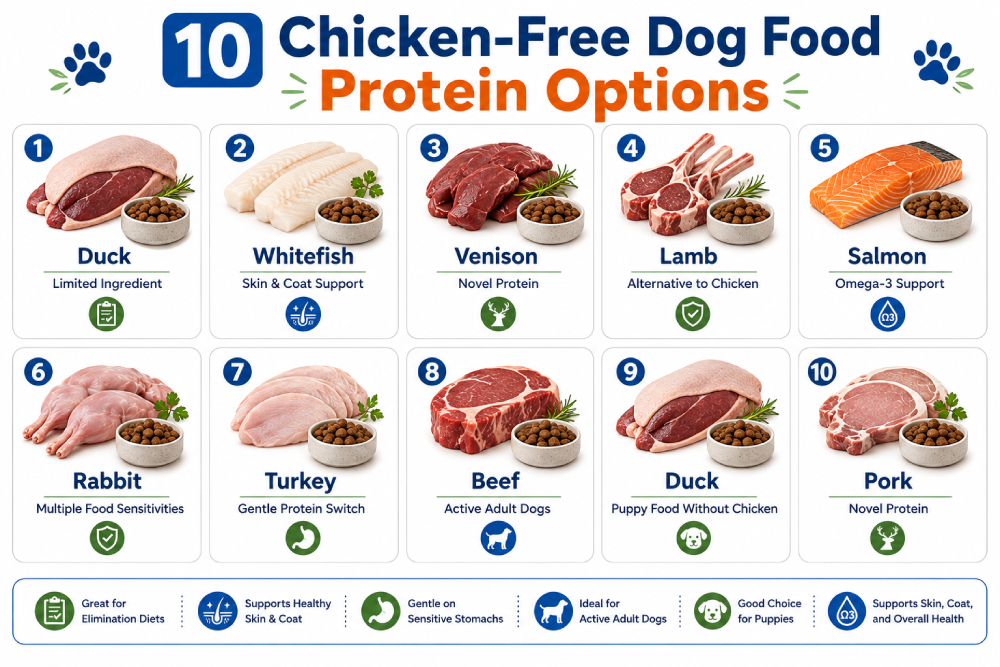
| Food | Primary Protein | Best For | Format |
|---|---|---|---|
| Duck & Potato Limited Ingredient Formula | Duck | Adult dogs with suspected chicken allergy | Dry kibble |
| Whitefish & Sweet Potato Formula | Whitefish | Skin and coat sensitivities | Dry kibble |
| Venison & Green Pea Recipe | Venison | Novel protein elimination trials | Dry kibble |
| Lamb & Brown Rice Formula | Lamb | Dogs transitioning from chicken-based diets | Dry kibble |
| Salmon & Sweet Potato Grain-Free | Salmon | Omega-3 support for skin health | Dry kibble |
| Rabbit Formula LID | Rabbit | Dogs with multiple food sensitivities | Dry kibble |
| Turkey & Pumpkin Recipe | Turkey | Gentle protein switch | Wet/canned |
| Beef & Barley Formula | Beef | Active adult dogs | Dry kibble |
| Puppy Duck & Oatmeal Formula | Duck | Puppy food without chicken | Dry kibble |
| Pork & Squash Novel Protein | Pork | Dogs who have tried multiple proteins | Dry kibble |
How to Transition Your Dog to a New Food
Use a gradual transition over 7-10 days: 75/25 for days 1-3, 50/50 for days 4-6, 25/75 for days 7-9, then 100% new food.
Frequently Asked Questions
Is grain-free necessary for a chicken-free diet?
No. Grain-free and chicken-free are completely separate considerations. Discuss grain-free options with your vet.
How long before I see improvement?
Skin and coat improvements typically take 6-12 weeks. Digestive symptoms often improve faster, within a week or two.
Final Thoughts
Finding the right chicken-free dog food is a process of careful label reading, patience during the transition, and close observation of your dog's symptoms. When in doubt, loop in your veterinarian.